Quick take
- Fees are charged on both the buy and the sell, so a price has to rise past them before you profit.
- 'Instant buy' buttons often hide a markup in the price.
- Network fees, withdrawal fees and futures funding are easy to overlook.
Maker and taker fees
Most exchanges charge a percentage of each trade. Orders that sit in the order book (makers) often pay less than orders that fill immediately (takers). A 0.1% taker fee on a $2,000 purchase is $2, and another $2 or so when you sell.
The spread on simple buy buttons
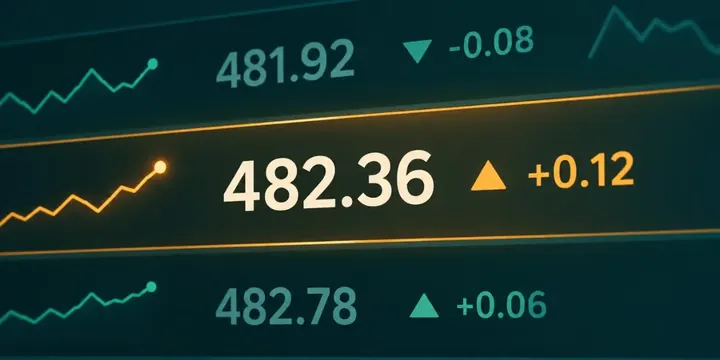
Convert or instant-buy screens usually quote a price slightly worse than the live order book and may show "zero fees". The difference is the fee. Compare the price you are offered with the market price on the exchange's trading screen.
Deposit and withdrawal charges
- Card deposits commonly cost a few percent; bank transfers are often cheaper.
- Crypto withdrawals carry a fee that covers the blockchain's network fee, and sometimes more. It varies by coin and network: moving USDT on Tron and on Ethereum can cost very different amounts.
Futures funding
Perpetual futures charge or pay a funding rate between long and short traders, typically every eight hours. At 0.01% per interval, a $10,000 position pays about $1 each time, or $3 a day. In strong markets rates can be many times higher. See spot vs futures.
Forex and CFD costs
If you trade currencies or CFDs, you pay the spread in pips, possibly a commission per lot, and overnight financing on leveraged positions. On EUR/USD, a 1-pip spread on one standard lot costs $10. Our pip calculator converts pips into dollars.
Put it together
The crypto profit calculator shows how much a price must rise to cover fees on both sides.
Common questions
Why did I receive less crypto than I expected?
Usually because of a spread built into the price, a card fee, or both. Check the order details for the exchange rate used and every fee applied.
Are withdrawal fees the same on every network?
No. The same token can cost very different amounts to move depending on the blockchain and how busy it is.